Shook-up world: What is the value of wilderness?

Like so many people, I am dazed by the events of this week. On Tuesday night I went to bed in tears, shocked and frightened by the outcome of the election. Trump’s campaign always felt like a prank to me, and now it feels like a prank that got out of control and set fire to the house with all of us trapped inside.

My fear stems from the following:

  • We have just sent a message to every secretly bigoted and misogynistic creep on earth that we, as a nation, condone abusive behavior and expressions of prejudice. This, more than anything else, frightens me.
  • I heard yesterday that Mr. Trump has expressed an interest in allying with Russia in Syria. Although I thought I remembered hearing that Russia was no longer backing Assad, I couldn’t find anything in a short online search to confirm that recollection. It is horrifying to think that our country might lend support to a criminal head-of-state who has used chemical weapons against his own people.
  • We have empowered a science-denier to make policy decisions that will have an irreversible impact on the environment.
  • Mr. Trump will have the opportunity to appoint as many as three supreme court justices.
  • Mr Trump will appoint a cabinet. I keep hearing rumors of a Secretary of the Interior with oil interests (Forrest Lucas, Sarah Palin) and an Energy Secretary with financial interests in fracking and in the Dakota Access Pipeline (Harold Hamm). I’m trembling here at the hem of ANWR.
    I understand that our Department of the Interior is responsible for managing federal lands in the best interest of the American people, for industry and recreation as well as conservation, but I am not convinced that the economic and political benefits of developing oil and natural gas are always worth the price we pay.I have not been persuaded that the potential benefits of developing mineral resources in ANWR outweigh the potential cultural and environmental costs. I know that this state runs on oil money and that my job and many, many others depend either directly on the oil industry or on the state budget. I know that it has never been demonstrated that the Porcupine caribou herd would be disrupted by development in the 1002 area. I know that the pipeline needs to maintain a minimum pressure or be permanently dismantled, and that with Prudhoe Bay producing less than in previous years, we need a new source for oil if we want to keep it open. I know that Alaska Senator Lisa Murkowski has vowed to open the 1002 area in ANWR for drilling, and there will never be a better opportunity.  I expect the onslaught to be immediate and forceful, and I know that my students and their families are not prepared for it.

I’m trying to channel my anxiety into action. I’m reading endless articles and teaching my class with a renewed passion for civics. I am trying to cultivate a diversity of nuanced opinions among my students, who are usually, to their detriment, of one mind. I told the kids today, as I have been telling them for months, to bring me their voter cards when they turn eighteen and I’ll bake them each a cake to celebrate their power. I want the kids to know how the government works and how to influence it. I want to spend the next four years building up to a huge celebration of the centennial of women’s suffrage. I want to get my students informed about Standing Rock and the Dakota Access Pipeline and in contact with native kids, like them, whose environment and heritage may be threatened by oil development. I also want them to understand – really understand – the perspectives of people who don’t share their views, including those who wish to develop oil resources. I have never been so motivated to get my students writing clear, cogent, persuasive essays. We have such a long way to go, though. They are miles behind and not catching up quick.

But, after all, why bother with all of that? What is the value of wilderness?
dsc05351

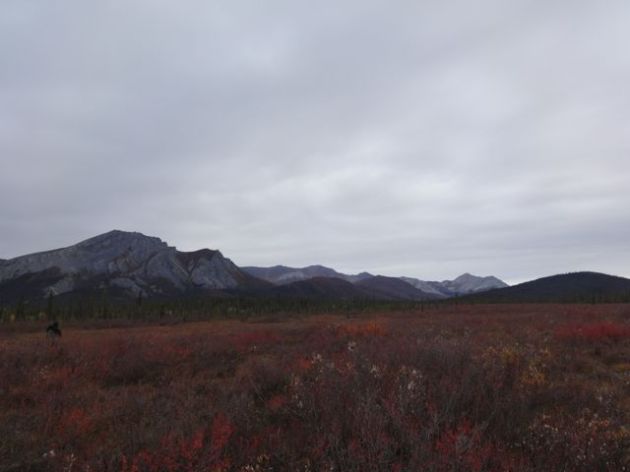
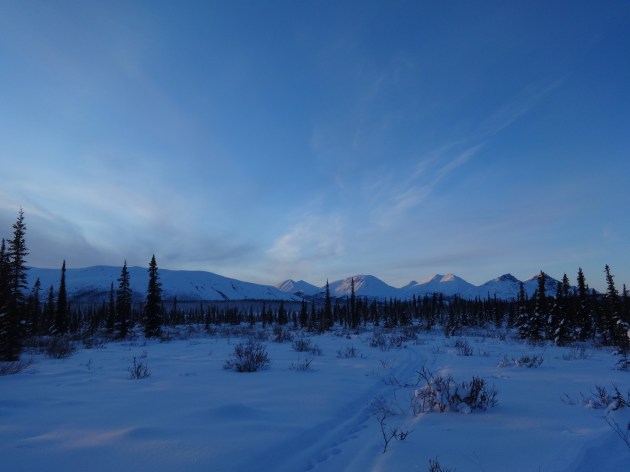
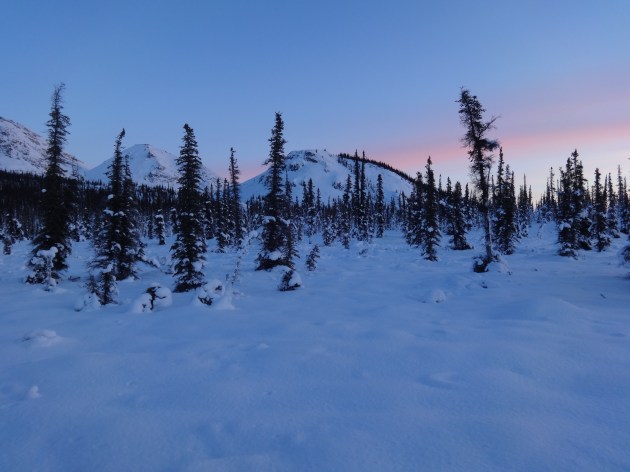
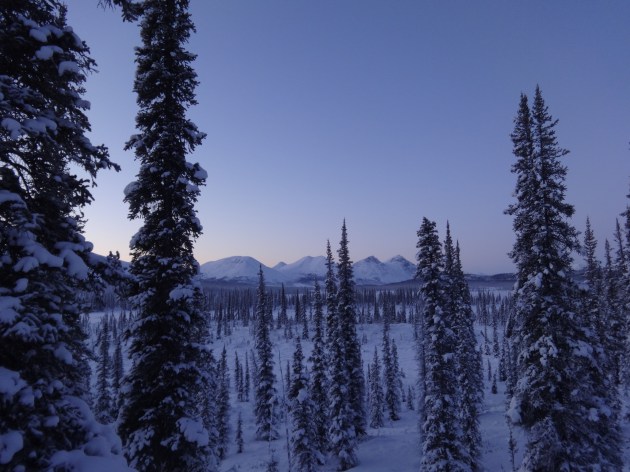
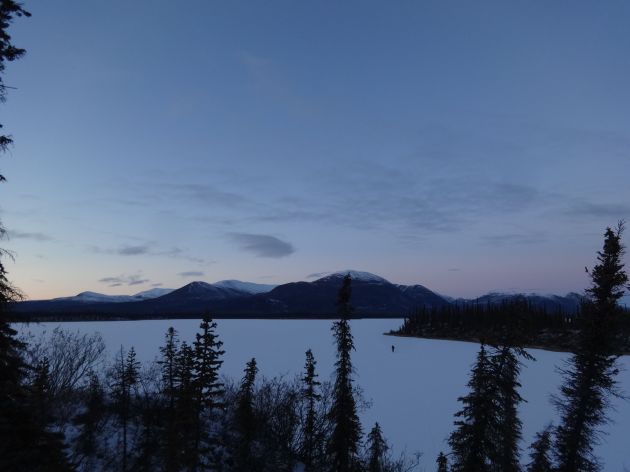
Wilderness is valuable for its power to make us feel small. We spend so much time in human-built environments, perfectly made to our scale, that we forget how we diminish in the presence of  mountains and tundra, how we disappear in the course of rivers that churn with mud and power. When I am out there, I am no greater than one of seven-billion ice-crystals lying under an unknowably deep and vast sky.

It is valuable for its beauty, if you believe that beauty has value.

It is valuable for subsistence and cultural diversity, if you believe that subsistence and cultural diversity have value.

It is empowering.
How does it feel to stand in a silent, snow-filled valley, hundreds of miles from anywhere?
It feels like hugging the sun.

It is valuable for its complexity. As Carl Sagan reminds us, “The beauty of a living thing is not the atoms that go into it, but the way those atoms are put together” (thank you, Symphony of Science). We have so much yet to learn from the systems that interconnect in wild places. It is not enough to take pictures and samples to fossilize in a lab somewhere: the complexity of nature demands space, time and variables that cannot be simulated or artificially preserved. By eliminating wilderness, we preclude the full expression of these complex systems and curtail our studies and potential scientific knowledge.

The variation – the biodiversity – that powers the miracle of evolution also powers the miracles of medicine and technology: we look to biology and ecology for answers to our most difficult human challenges, and, without wilderness, those answers have no place to live.

And what about this wilderness? The Arctic National Wildlife Refuge? What is its value, specifically? I try to be pragmatic, and I think I am. I can see my way all the way around most political issues. I can see what people who want to develop the resources in the 1002 area see. Economic growth is important. Jobs are important. Energy independence is important. But vast, untouched and untouchable wilderness is inherently valuable for its power to command our respect and awe. Arctic beauty is important, more so as it dwindles. Culture and caribou are important. Unique biological and ecological processes and systems are important. And the only difference that really matters between these things and those things is that these things are available nowhere else in the world.

If by cultivating economic growth, jobs, and energy independence we compromise the biodiversity and cultural diversity of the planet, we pay too high a price.

In other news, ahshii. It’s snowing.

At last.
Oops Pie

dsc05155

By far, the most embarrassing thing that has ever happened to me happened on Monday.

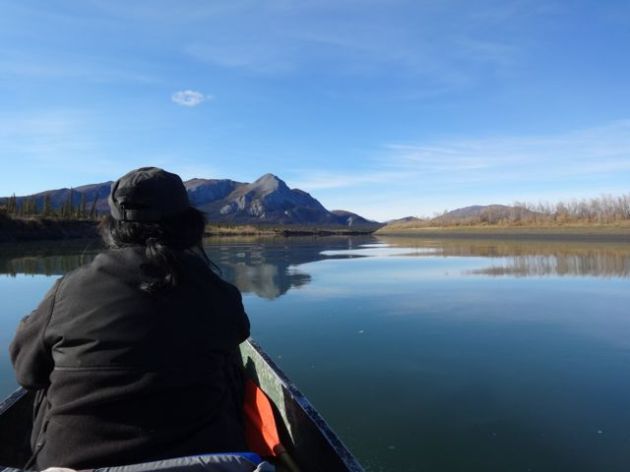
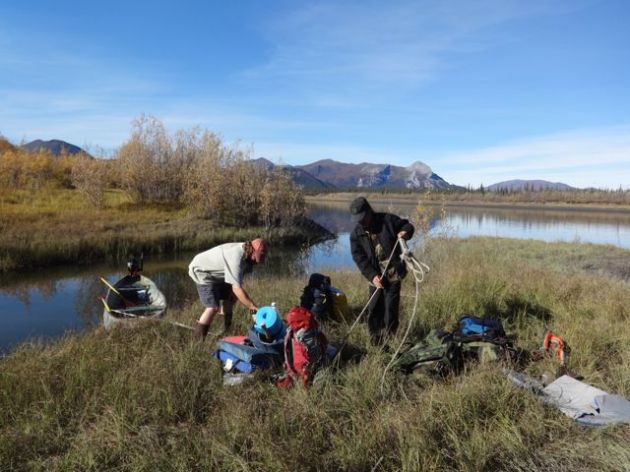
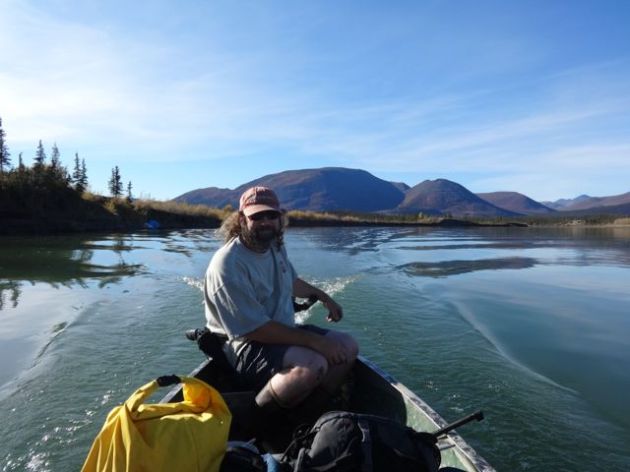
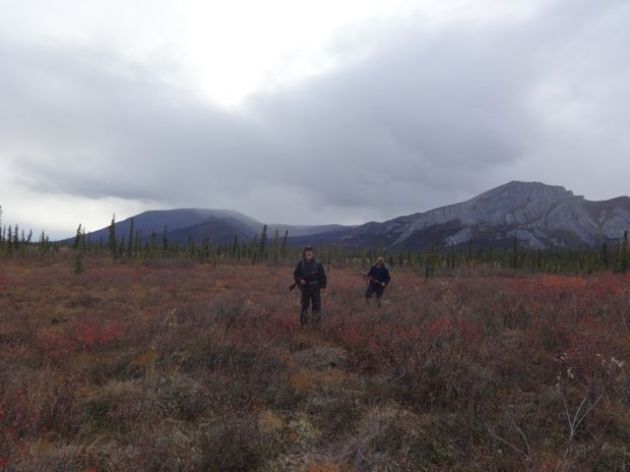
Last weekend, Geoff, Albert and I borrowed a canoe and took off for an adventure. We were camped a ways up Deadman’s Creek, and we spent all of Monday hiking in the tundra and berry picking at the base of the mountains. We’d just gotten back to camp, tired and sore from picking our way across the tundra, and were sitting down to eat some dinner before heading back to the village when search and rescue showed up. A complete surprise.

dsc05152

“Yeah, your Dad called the troopers,” one of the guys said. I looked down at my feet, silently wishing the ground would split open so that I could fall in and be swallowed up by a new slough. Stupid-girl Slough.

dsc05147

The details don’t matter much, just that it was a communication breakdown and entirely my fault. The searchers were good-humored about it, glad to find us all in one piece. What a first impression I must have made, though, moving to Arctic and causing such a stir within a week. There was a sign posted out in front of the school when we got back “No school Tuesday September 6th until Teachers are Found.” Wright Air flew over the river looking for us, and Venetie was all stirred up on my account. Board members called the superintendent. Kids cried. Geoff’s mom found out and told her neighbor and he managed to get a prayer circle going in West Virginia. What a mess.

dsc05163

But all things, even embarrassing things, pass, I guess.

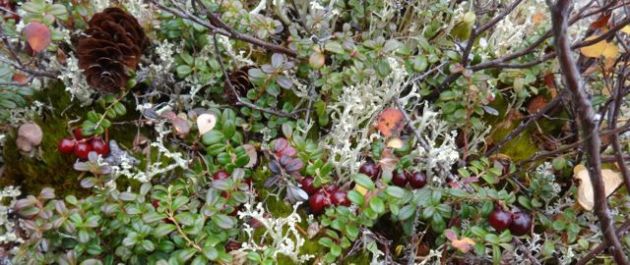
I made pie the other day from the blueberries we picked on Monday. They were shriveled up and sweet and purple on the red-leaved bushes, and they made my fingertips and teeth blue. That Tuesday morning the mountains were dusted with snow (we motored through a nasty little rain-squall to get back to the village, and it was cold and awful, so it stands to reason it’d be snow a few-hundred feet higher), so I think that was the last of the season’s blueberries. Embarrassment pie, mortification pie, sweet, delicious, wonderful, blueberry-major-oops pie. dsc05140

dsc05142dsc05154dsc05174dsc05159dsc05179

How to be Wildly Happy on a January Day in the Arctic

DSC04342

Wake up slowly, miles from anywhere. Stoke the fire and watch the sun wash the snow for a slow noon hour.

DSC04347

Then, layer up and ride out while daylight still lingers like sugar on the ridgelines.

DSC04362

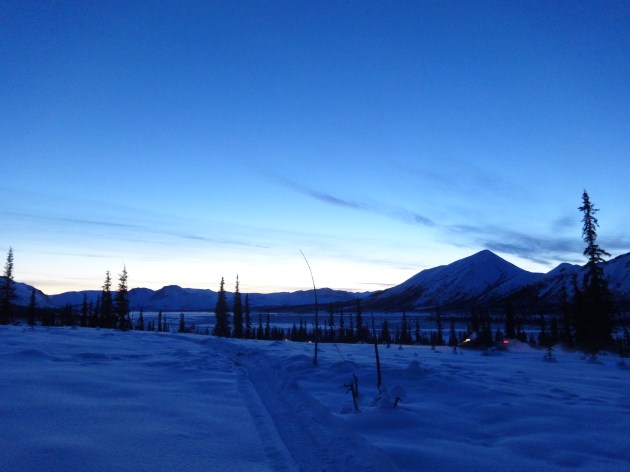
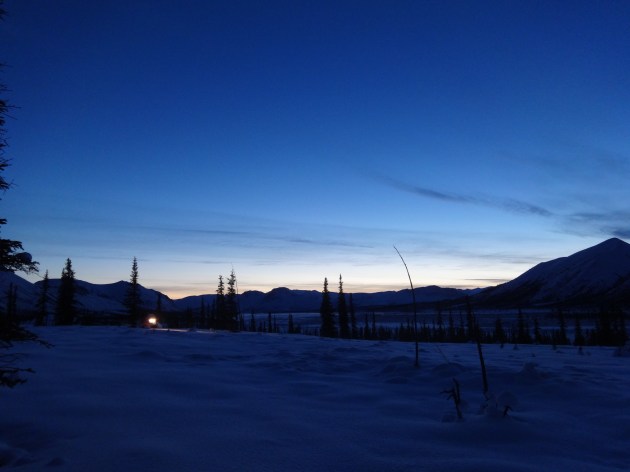
Break trail a while, then stop to watch the sky go soft around the edges,

DSC04358

and to sweetly kiss someone wonderful at the top of the world,

DSC04363

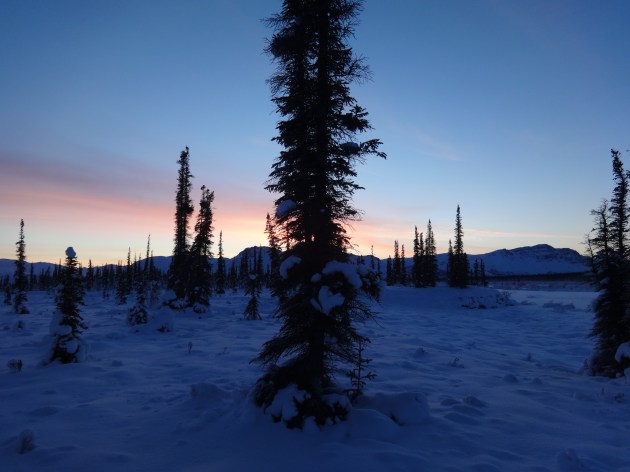
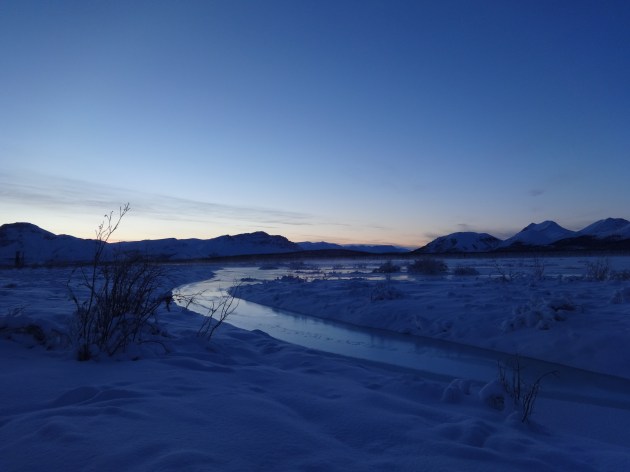
while that world turns to silhouettes and shadows, and the valley shivers with steam rising from the overflowed creek.

DSC04373

Hold on, swallow fear, and fly over rattling ice you can hardly hear over your rattling heart.

DSC04377

And climb a hill and wonder, breathless, at the pathless wilderness, the sure mountains with the sun pressed between their shoulder blades.

DSC04378

Watch your breath fog in the cold and know that months have come and gone since human boots have printed this hilltop. Let the shape of this bowl of sky press into your memory while you leave winding, wood-gathering footprints on the hillside.

DSC04376

Build a fire while the sunlight dies. Make dinner and press palms to the column of heat while you wait for the moonrise to break the soft peaks of the horizon.

DSC04384

Let the night overflow, then ebb to moonlight and the shadows of two human figures on the snow. When the firewood is gone, take the long road home. Arrive late. Arrive cold. Arrive stiff and stumbling and exhausted. Arrive grinning and shivering and grinning. Sleep well, sleep warm.

ANWR Christmas

I think I’m going to be in Alaska for a long time.

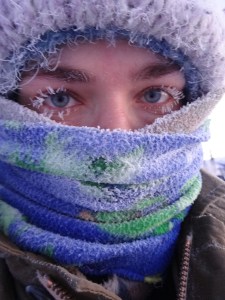
Jake has always said “Keely, the look on your face when you walked out of that classroom on the first day… I knew you’d be in Alaska a while”

DSC04314

This wasn’t the look on my face, yet, but it’s a pretty darn good look.

It’s a year later now, almost to the day, and we talked about it again a few days back. He could see it right away, I guess, and I guess on some level I’ve known almost as long.

Last week, in Ohio, Jesse gave me a crash course in chainsaws. My hoodie pockets are full of tiny wood shavings and I feel like a badass. Or at least someone who is approaching badass and isn’t scared completely shitless of chainsaws anymore. I’m working on building the skills to take care of myself out here, and I have miles and miles to go. Even just washing dishes at Geoff’s over break (he doesn’t have running water) was a learning experience.

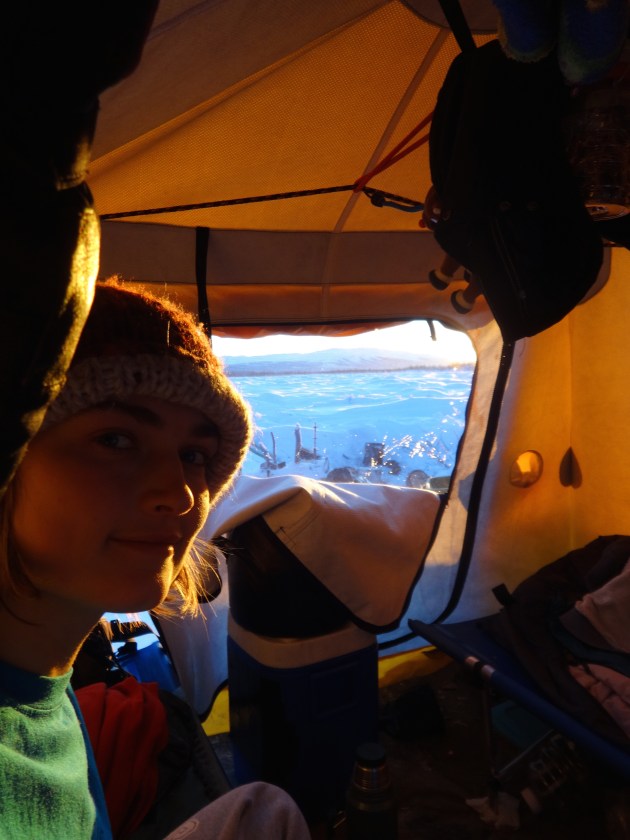
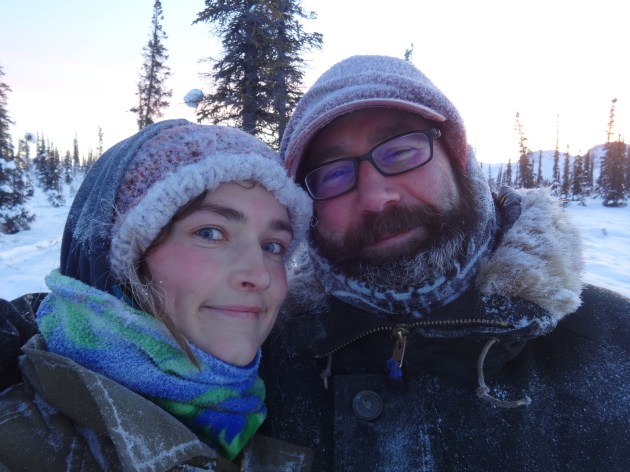
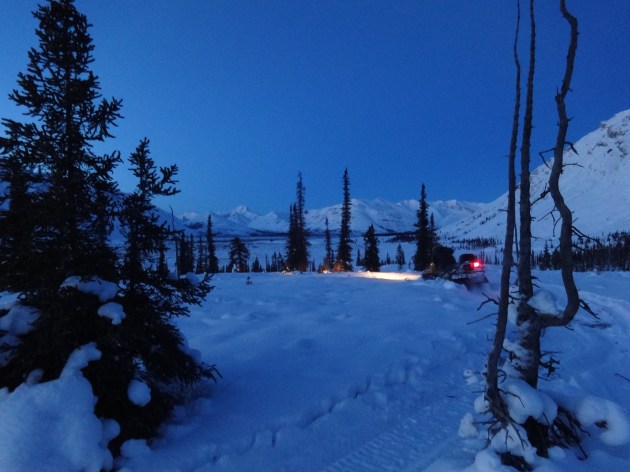
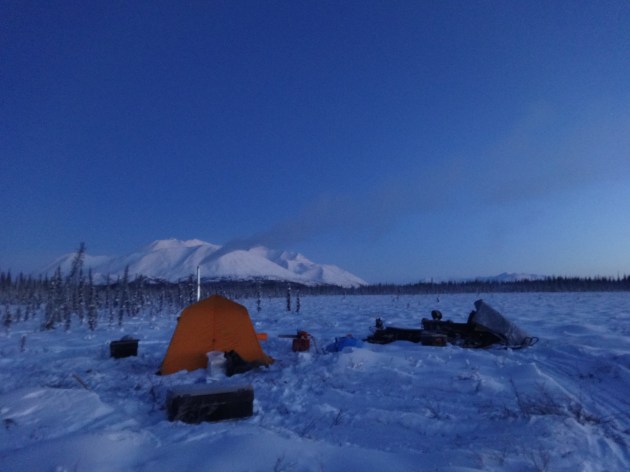
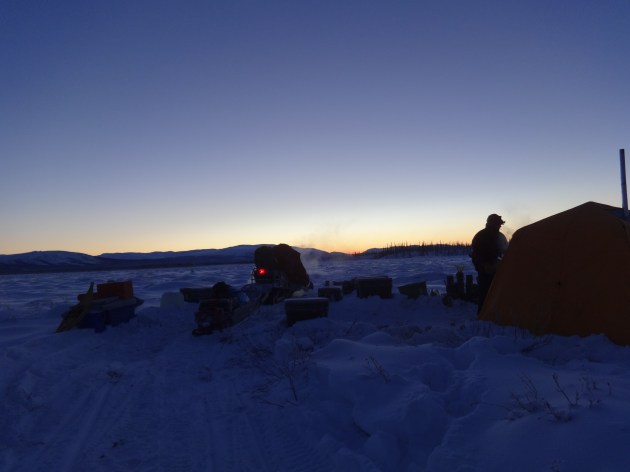
Geoff took me camping in ANWR for Christmas. We hung around Arctic village for a few days, hoping the temperature would pop up over -30. When it finally did, we jumped (-25 wasn’t much of an improvement, but you take what you can get). Just as we managed to get the tent up at the site he’d chosen, the temperature started dropping. It settled in the forties that night and didn’t shift for days. It dropped to -45 at the coldest, and I thought my buttcheeks might freeze solid when I went out to pee, but it was outrageously beautiful.

DSC04290

When it’s cold like that, smoke from the woodstove settles in the still air.

We boiled snow for drinking water, and kept the bottles close to the stove so they wouldn’t freeze solid. We kept the frozen fruit by the door, and moved it closer before snacking so that it wouldn’t be -40 when we tried to eat it.

DSC04288

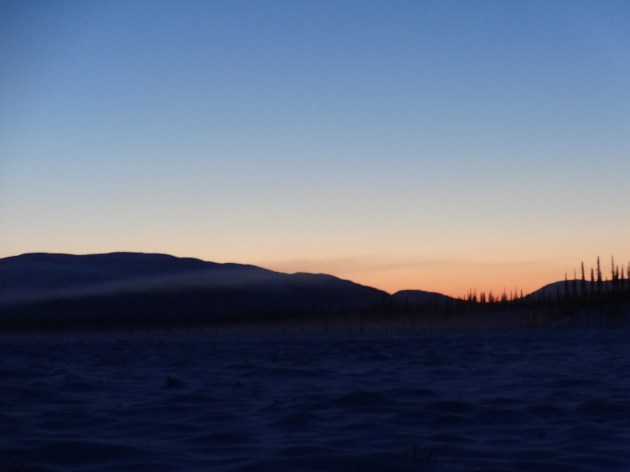
The sun never kissed our side of the horizon while we were out. We had a few hours of long, soft daylight each day, and endless hours of clear, starry night.

When it’s that cold, engines freeze up. With the chainsaw, you can just bring it into the tent to warm up, but you have to get up every few hours to start the snowmachine (otherwise it might get too cold to start, and then you’re in trouble unless you’ve got some handy, safe way to put fire under the cowling). Geoff literally brought the kitchen sink (it’s a big, handy, enamel bowl, in his case, and fits nicely in an ActionPacker) but drew the line at the generator. Every night we were out, his sleep was broken when the fire would die and the temperature in the tent would plummet. He’d stoke it up, then head out to run the sno-go for a while.

DSC04293

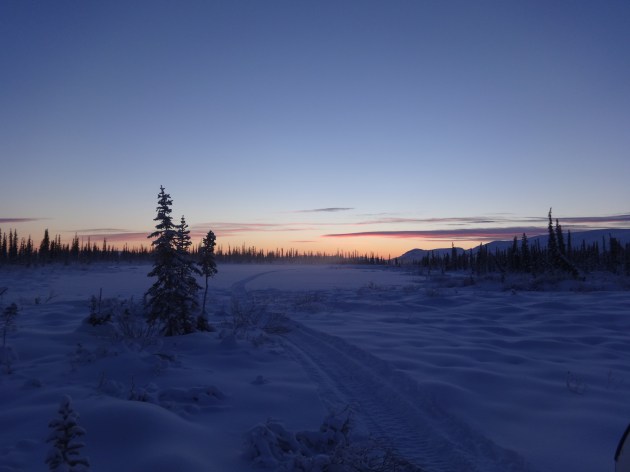
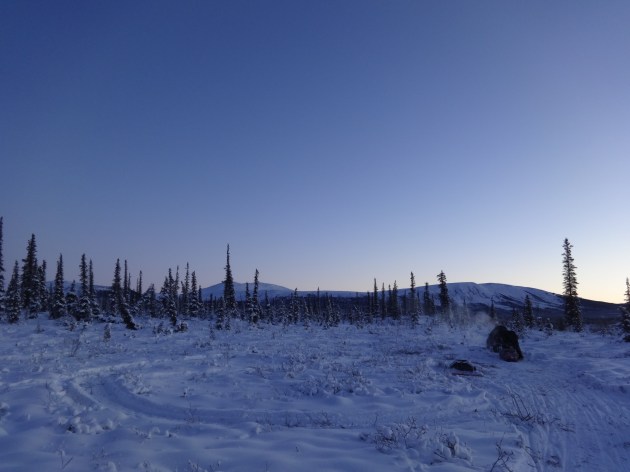
On one morning’s ride, we stopped here just to stare at the beautiful sky and the light on the snow.

On the last night of our adventure, we rode out and found a bit of high land with a view of the mountains and had ourselves a picnic dinner.

DSC04295

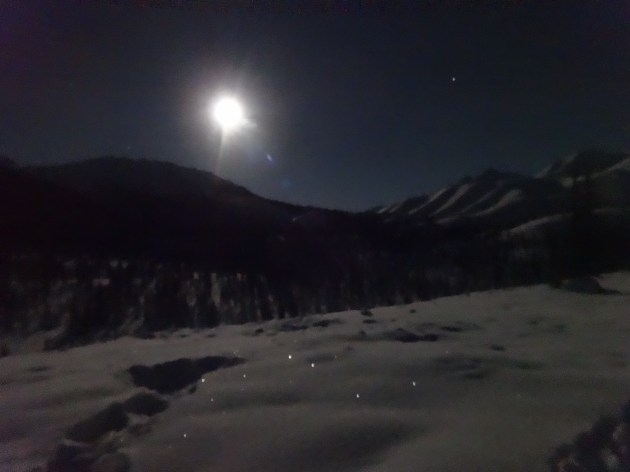
We built our fire on a hill very much like this one and waited for the moon to rise and fill the valley with light.

I knocked low, dead limbs off the trees with an axe, and Geoff used the sno-go to pack down the snow in our campfire area for easy walking. He unloaded the wood we’d hauled with us (sizable logs from an earlier stop) and started handing me kindling. It was -20 or so, and the wind was blowing a little. I was grateful for the fire, once we got it going.

The stars came out of the murky, day-gray sky first, and we compared knowledge of constellations. Then the moon spilled its light against our backs and the trees, and the smoke from our fire covered its face and made it turn colors. I have come to love the shifting smoke-shadow that the moon casts on snow. It’s every bit as mesmerizing as fire, but so much more cold and ethereal. Eventually, the valley was brimming with moonlight. There was no sound but the chattering fire, no light but the light of our camp and the moon. We were thirty trail-miles from the village. I have never been so far north or so far from other humans.

Geoff wrapped some caribou in bacon and packed it in foil, then threw it right on the fire. I warmed tortillas gingerly on the edge of the blaze. We ate hungrily and fast as the fire consumed the last of our wood, then packed up quickly and unceremoniously while the northern lights started to spool out over the treetops and rode back to camp, with a hurried, chilly stop to load wood that Geoff had cut on the way out.

The tent warmed up fast, and the temperature outside dropped. It was in the thirties again by the time we headed back to town the next morning.

DSC04309

DSC04312

It was nearly noon when I took this picture. We were on our hurried way back to the village so that I could make my 2:00 flight. It’s hard to get moving before sunrise.

I need to learn to do this for myself. Geoff is awesome, but I’m independent by nature and fierce about it from experience. And I think I’m going to be in Alaska for a long time.