
Sean and I came home from school on Friday and snapped into action, cleaning the house and putting away anything we didn’t want covered in the inevitable mud and blood attendant with home butchery. We folded up the futon, tucked away the books, moved everything within three feet of the sink to a safe zone. We felt we knew how to prepare for this process. Sizzle would be the fifth pig that we had tackled, and we felt confident and experienced.
The plan:
4:00 get home, clean up, prepare the tools, and light a fire to heat water for scalding
5:00 shoot Sizzle and begin skinning her
7:00 shoot Levi and have one team work on scalding while the other finishes butchering Sizzle.
11:00 bed time.
We had some friends coming over to help, and we experienced a delay when no-one turned up until much later than we’d hoped. No big deal, there was plenty of prep to do. When Katie arrived, we were ready to go and it was getting dark, so we decided not to wait for the rest of the team, but instead to get on with the first pig of the evening.
#1 The pig won’t die (7:00 pm)
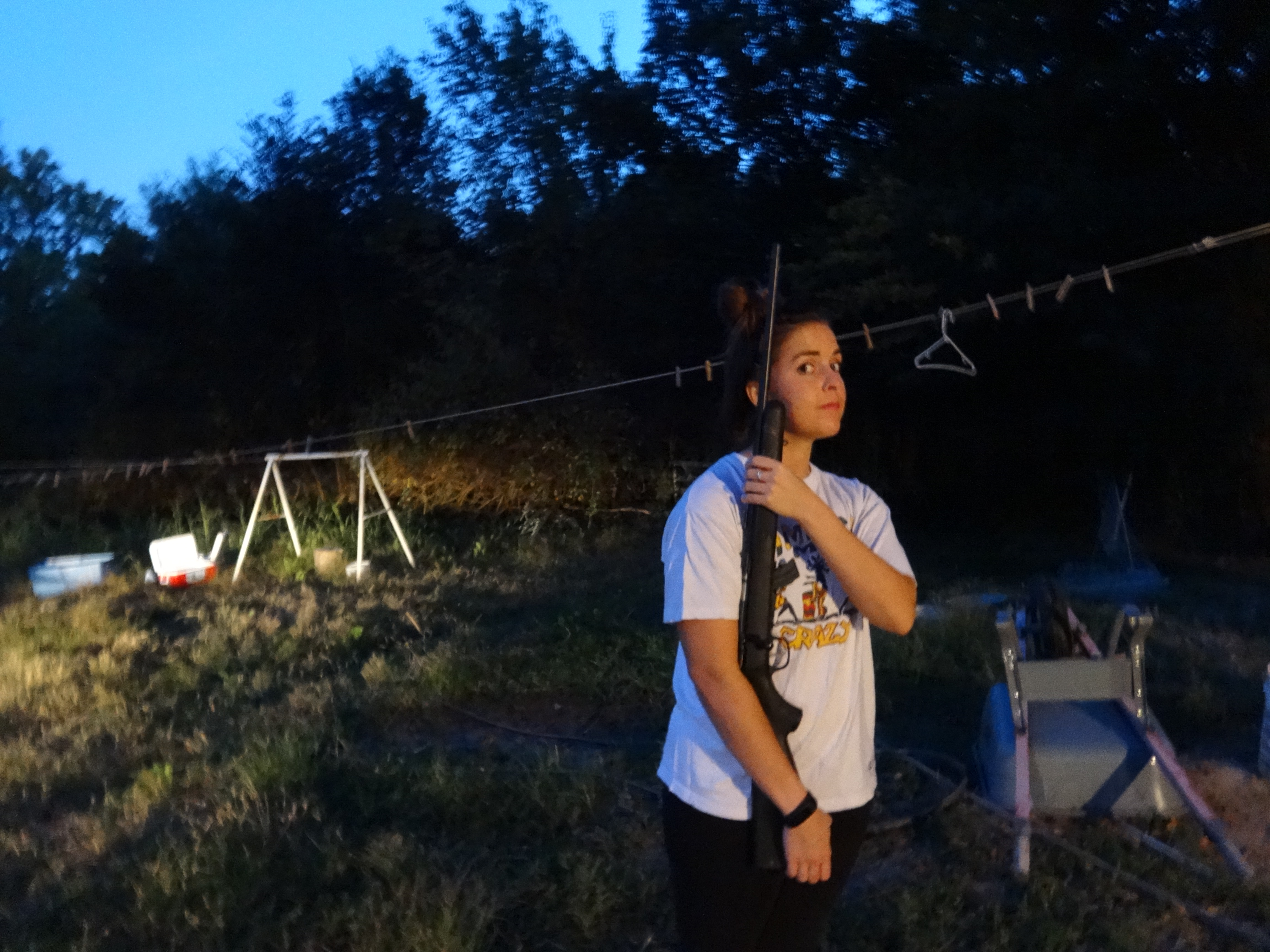
Sizzle was Katie’s pig: she had planned with us for this moment since spring break. Sean gave her a quick primer on where and how to shoot the pig, and she did well, but instead of lying down silently at the first shot, Sizzle ran screaming. It was awful. She wouldn’t stay still enough for us to get a second shot in, and at one point she ran under the front porch for safety. “Straddle her Keely, hold her so I can get a shot!” For the record, I didn’t, but we were in the sort of agonizing panic that makes you do stupid things. Sean put three more shots in her head before she fell. When we examined the skull, we found the four shots clustered just a hair lower than they should have been. I saw Sean sobbing as he ran after her, gun in hand. When she finally dropped, I flipped her and Sean stuck her beautifully. We all took deep breaths while she bled out.
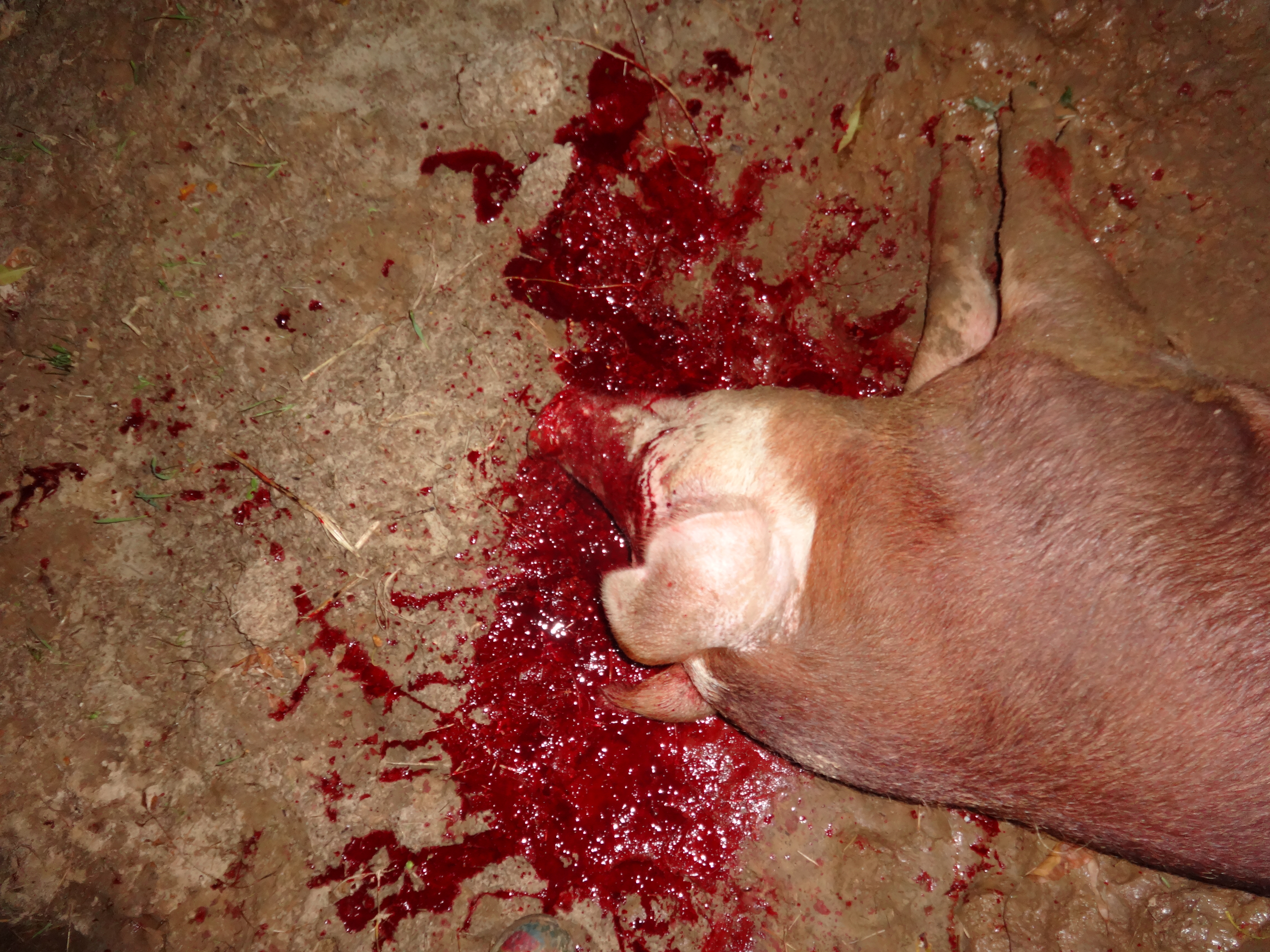

As a team, we dragged the carcass to the hanging tree. We sprayed the carcass down and laid it out on a board to skin the hams and the belly. Things began smoothly, and I felt good about the skinning process. Belly and hams done, it was time to hang the carcass.

#2 Equipment failure (8:30 pm)
We had a spreader bar hung by a rope over a limb on the big oak tree in the yard. We had another rope made off to a stump and the two ropes linked by a comealong. We stuck 300lb super zipties through the hocks (we used these same zipties for a much larger pig last fall) and looped the zipties over the hooks in the spreader bar. Using the comealong, we began ratcheting the carcass up to finish the skinning. At about eye-height, one of the zipties snapped and sent the skinned carcass wobbling dangerously over the dirt. We sprang into action and steadied the pig, casting suspicious eyes on the other ziptied leg. Crisis averted, we lowered the spreader bar slowly and tried again, figuring we’d just had a little bad luck with a flawed ziptie. Nope. After another ziptie failure, we strung rope loops through the hocks and got back to ratcheting the carcass into the air, satisfied that those couldn’t possibly fail. Boy we were in for it.
When the hams were at about eye-height, there was an ominous cracking noise. Sean jumped away from the comealong and cursed at the top of his lungs. The bolt that holds the whole thing together had split and jammed the mechanism. It wasn’t slipping, but we’d gotten all the lift we’d ever get out of the tool, and our pig was still resting half on its back.
We considered trying to hoist the carcass using the Nissan, but our truck was officially diagnosed with terminal rust on Friday, and we couldn’t risk ruining the transmission on our only working vehicle.
Somewhere in there our other friends showed up with no clue what they’d bargained for. We put them right to work by having them help to lift the carcass while I tightened the rope around the stump. All of their help got the carcass resting on its shoulders, and we had to settle for that.
This constituted a serious setback. We’d planned to skin the entire pig, gut it, then saw it clean down the middle, judging whether to saw through the skull or cut off the head, depending on what was easier. With the weight of the carcass resting on the head and shoulder, we couldn’t finish skinning it. Each time we made a major shift in the position of the carcass, we risked soiling the exposed flesh.
Here’s where we made an unforgiveable mistake that will haunt us for a long time.
#3 Human Stupidity (11:00 pm)
We shot the second pig. We knew full well that we didn’t have a comealong (we’d tried calling neighbors, but no one had answered) and that we wouldn’t be able to hang the carcass. We were already exhausted, frustrated and we knew processing Levi would take some doing. It was a profoundly stupid, careless thing to do.
Sean lured Levi out of the pen with corn and she was clearly nervous. She wandered around the yard a bit, anxious, and Sean took the first good shot he could get. Levi dropped quiet after three quick shots, right behind the tree where we’d strung the first carcass. As she died, she kicked and wriggled and spattered dirt over all of the bystanders.
#4 Spiteful Porcine Sabotage (11:05 pm)
Levi’s death throes spewed clod after clod of dirt directly onto the skinned carcass hanging from the tree. I dived between the kicking hooves and the hanging flesh, trying to block the dirt with my body, and I have the bruises to prove it.
We split the group into two teams, one to focus on scalding the newly-dead pig, one to finish up the already hanging, nearly-skinned carcass. We on the skinning team soon encountered item #5.
#5 Ants (11:30 pm and ongoing)
Perhaps hosing down the carcass stirred up the hive. Whatever it was, our crew was soon hopping and swatting at clothes and shoes. The ant bites sting for long minutes, and the drop in morale that went with the pain made us realize how foolish we’d been in killing the second hog. Our friends weren’t enjoying themselves at all, and the end of the chore was a long way away. We looked at the unfinished hog hanging from the tree and the dead one lying beside the fire and suddenly felt the weight of all the work to come.
The scalding team began dipping the hog in the barrel we’d positioned on an angle over the pit-fire we’d prepared hours before. The water was good and hot and they experienced some success. It put a smile back on Sean’s face: he’d been looking forward to having some skin-on cuts for charcuterie and things finally seemed to be going his way.
I did as much skinning as I could, and I called him up to the tree for assistance with gutting and halving. 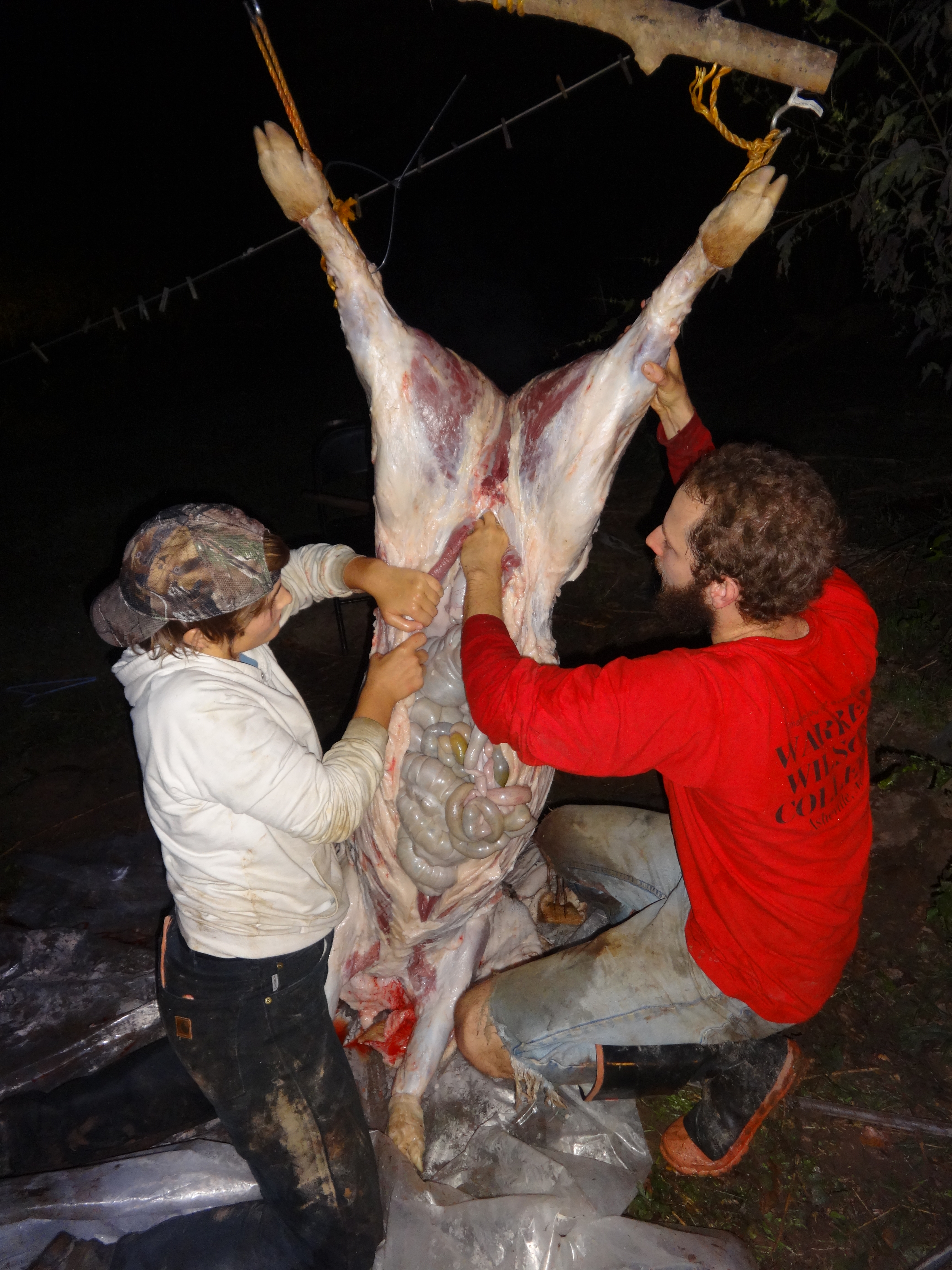 The gutting went smoothly, and the halving went well until we reached the shoulders. Here the spine curved because the weight of the carcass was still resting on the unskinned head. We tried ziptying the forelegs to our swingset, but the zipties failed (we are slow learners). We wound up bleaching the hood of the car and driving it up under the tree, then lifting the carcass onto it to finish splitting the halves and cutting away the head.
  The shoulders were a little botched, but we finally had the first pig in the freezer at 1:00 am.
#6 Scalding ain’t happenin’ y’all (1:30 am)
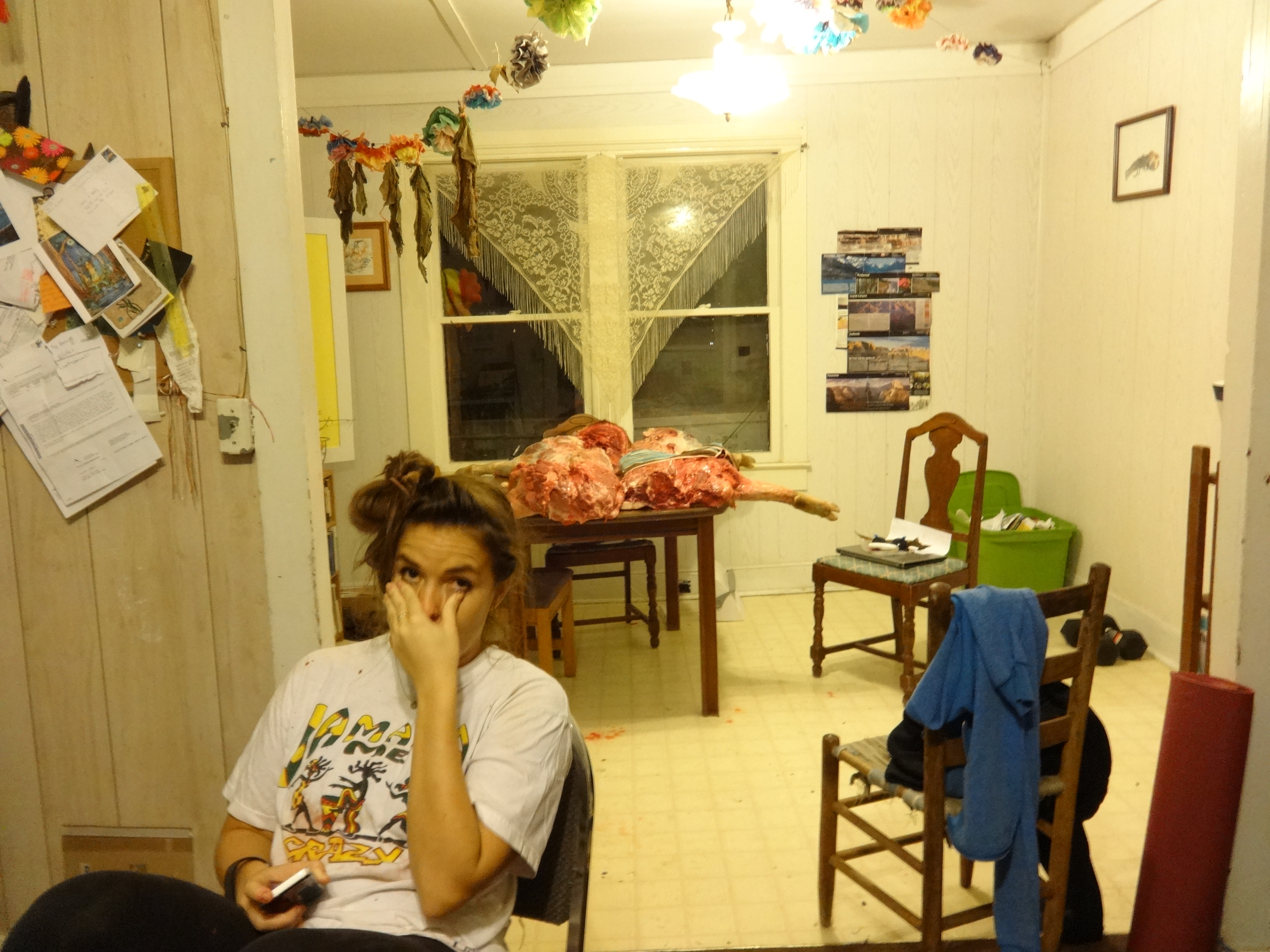
At first the scalding had worked: the scalding team had one shoulder and half the head scraped clean, but the water in the barrel had mostly splashed out onto the fire. They had begun heating pots on the stove, and the stove-heated water just wasn’t working. Sean was starting to have a mental breakdown, and everyone was staring off into space sort of blankly.
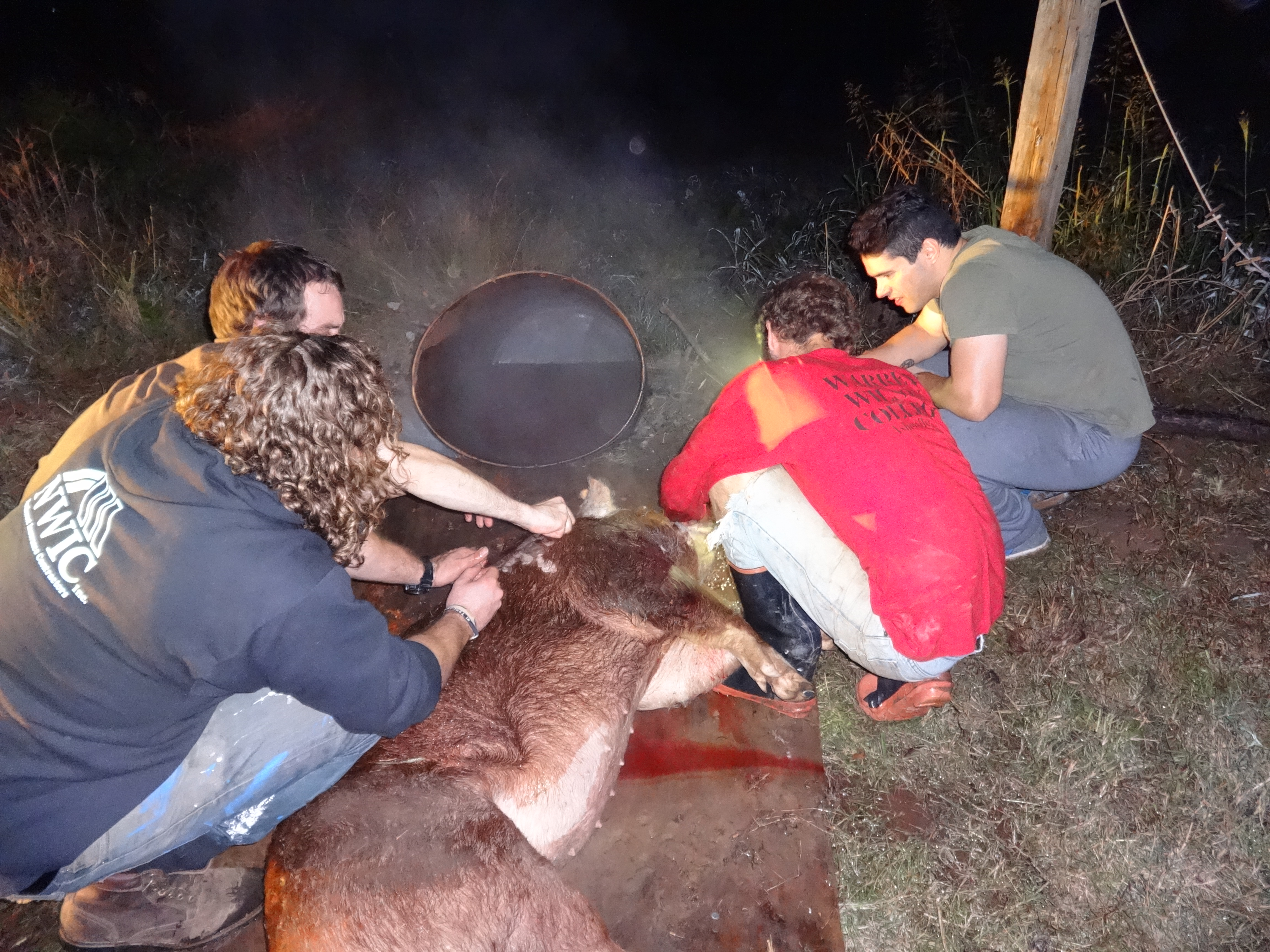
We had to skin it, which was a brutal letdown, but we did it fast and we did it as a team.
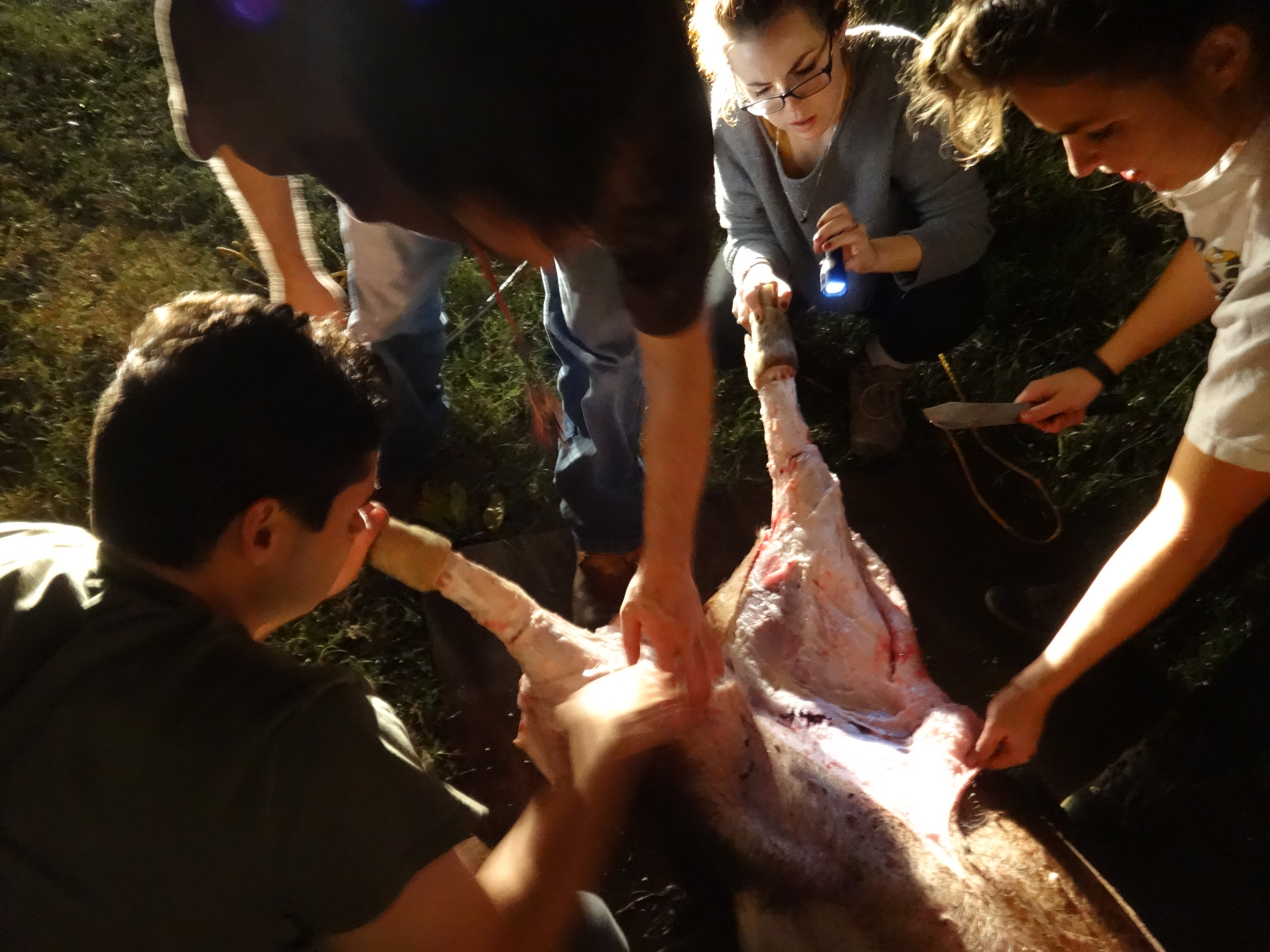
We hung the second carcass by its hocks from the swingset, and, when it came time, we drove the car up and slung it over the hood.

We processed the whole hog in under three hours, which is a pretty impressive accomplishment. We spilled some shit from the intestines all over ourselves and made a tremendous mess, but the carcass stayed surprisingly clean. Some meat had to be discarded the next day when the carcass was cut into primals, but the loss wasn’t nearly what it could have been.
I was in bed at 4:30 am and my entire body already hurt. There was mud and blood (as predicted) all over my house, and I had days of processing work ahead of me before I could sit down and blog about it all.
Thank you 7.8 times ten to the millionth to our amazing friends who came to our aid the strength of oxen and the stamina of nuclear submarines. There’s just no freaking way we would have survived Friday without you all.
Why do we do it? Why put ourselves through the pain and stress and mess and risk?
I do it to for that moment when I feel like Alanna on the roof of the world, stepping up and making decisions and pushing through the pain when everyone else is flagging around me. I do it for the challenge of solving an urgent problem that seemed impossible and devastating moments ago. I do it because I like to eat local, antibiotic-free, happy-meat and my region doesn’t have farmers markets or co-ops or natural food stores. I do it because my partner dreams of salami and dry-cured ham. I do it because I like having pigs around for their characters and spunk and garden utility, but I don’t want to feed a three or four-hundred-pound pet. I do it because I believe I can raise and slaughter an animal more humanely than a factory can. I do it because there’s nothing more incredible than the taste of Sean’s fresh-ground bratwurst, unless it’s the breakfast sausage or spicy Italian or chorizo or just plain pork medallions, never-been-frozen, fried up in the skillet.
I’ll do it again, and I’ll do it better.
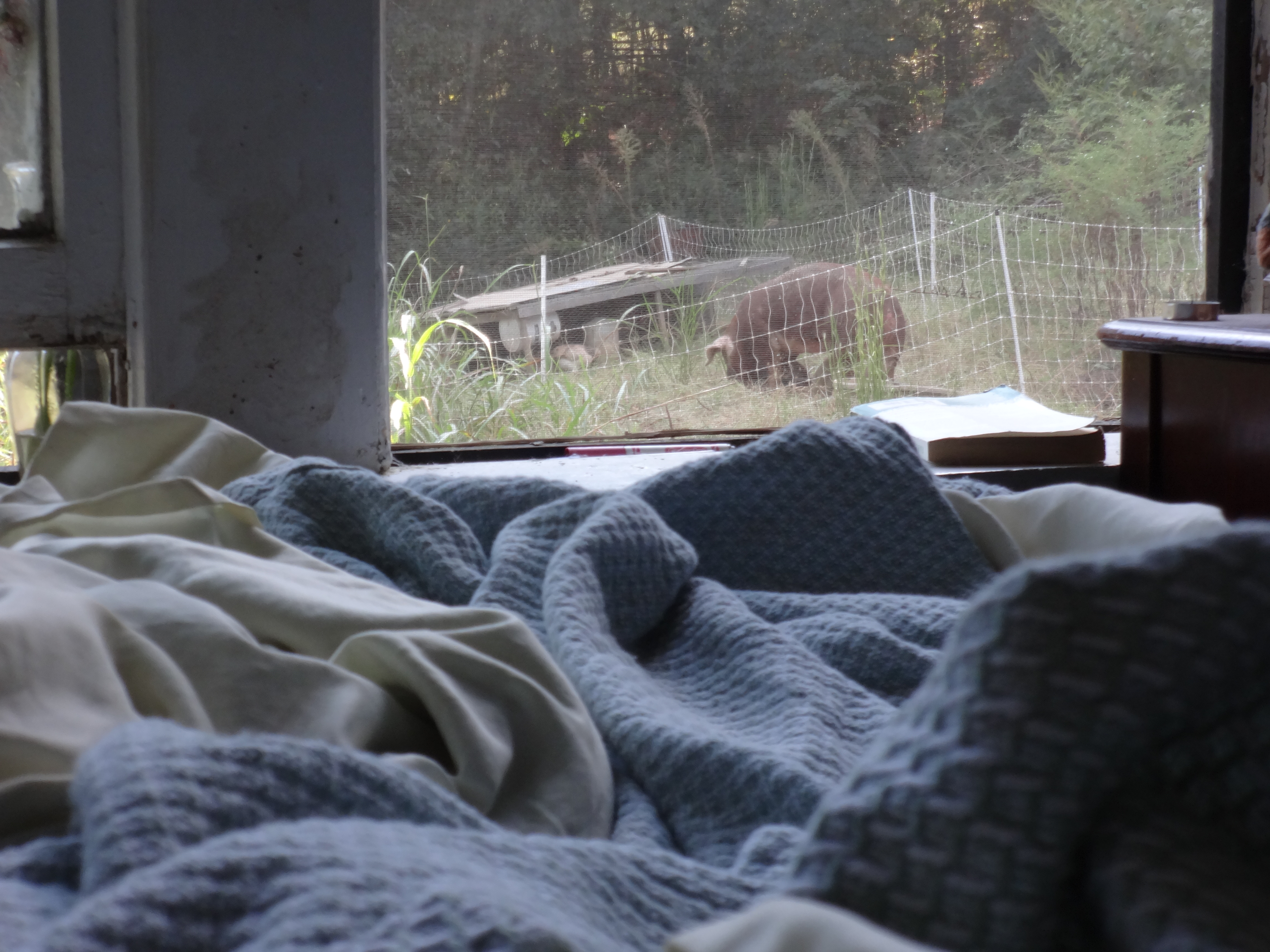
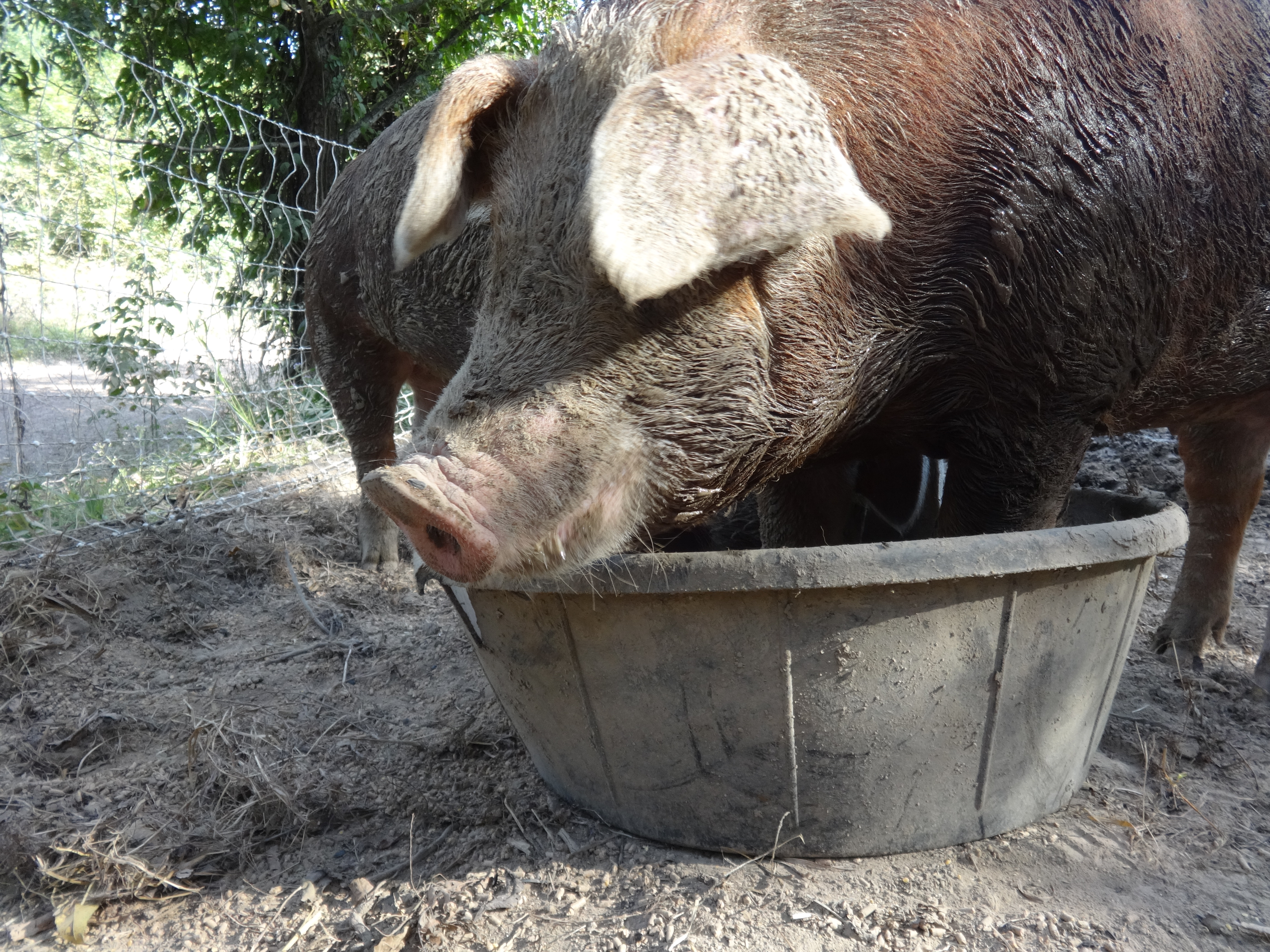

 chasing piggens